
M72(HC) power temperature coefficient
Performance Testing · KIWA Laboratory
Thermal Performance of Philadelphia Solar M72(HC) Modules
Temperature-coefficient testing of the 166 mm-cell M72(HC) module recorded −0.295% per °C, compared with the −0.35%/°C benchmark cited in the original announcement.
Comparison value cited in announcement
Standard Test Conditions temperature
Understanding the result
What does the temperature coefficient mean?
Operating temperature affects how efficiently photovoltaic modules convert sunlight into electricity. The power temperature coefficient describes the relative change in module output for every 1°C increase above the Standard Test Conditions (STC) reference temperature of 25°C.
A negative coefficient means output decreases as module temperature rises. A value closer to zero therefore represents less temperature-related power loss under comparable conditions. The original announcement compares M72(HC) with a typical value cited for similar modules.
Laboratory results
Testing conducted at KIWA Laboratory
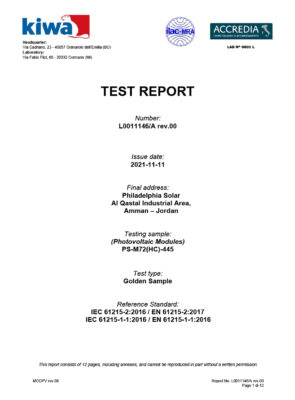
Philadelphia Solar tested the temperature coefficient of its 166 mm-cell M72(HC) module at KIWA Laboratory, referencing the IEC 61215 standards identified in the company announcement.

Performance comparison
M72(HC) versus the cited reference value
According to the announcement, M72(HC) achieved a power temperature coefficient of −0.295%/°C versus a cited comparison value of −0.35%/°C for similar modules. Under comparable measurement conditions, the reported result represents a smaller relative power decrease as temperature rises.
−0.295%/°CM72(HC)
−0.35%/°CComparison value cited in announcement
These figures are drawn from the original company announcement. The images shown do not replace review of the full laboratory report, test conditions, and exact module coverage.
Design considerations
Materials and technology supporting consistent output
Smooth soldering technology
M72(HC) uses a soldering approach intended to provide soft, reliable interconnections between cells, as described by the company.
Gallium-doped P-type cells
The module incorporates gallium-doped P-type cells as part of a design intended to support performance in warmer operating conditions.
Material selection and quality control
Philadelphia Solar emphasizes component selection and stringent quality practices to limit factors affecting long-term module functionality.
Best practices
Explore solar modules ↗Long-term performance starts with correct installation
Philadelphia Solar recommends following the module installation manual to support safe operation and the intended level of performance.