
Applied dynamic load
Quality Testing · Solar Module Performance
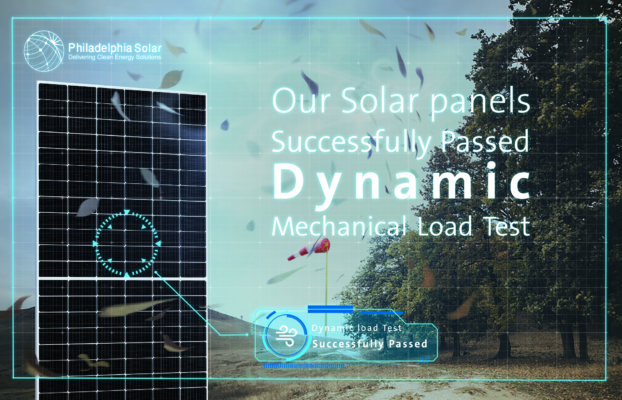
Philadelphia Solar Modules Pass Dynamic Mechanical Load Testing
UL laboratory testing reported strong results for Philadelphia Solar monofacial and bifacial modules under repeated mechanical loading, based on IEC TS 62782:2016.
Test at a glance1,000 Pa 1,000 IEC TS 62782:2016 4790324433
Performance documented in the test report
Modules were subjected to 1,000 Pa of dynamic mechanical load across 1,000 loading cycles, according to UL test report no. 4790324433.
Loading cycles
Referenced specification
UL test report number
Testing methodology
Designed to assess repeated mechanical stress
During testing, pistons applied a dynamic mechanical load of 1,000 Pa over 1,000 cycles. Both monofacial and bifacial module types were included in the test.
According to the announced results, the tested modules showed no progression of microcracks, module fractures, or dielectric breakdown following the test.
Post-test performanceBifacial modules−0.14% Monofacial modules−0.019%
Very limited changes in module output
The report described the following changes relative to original module power after dynamic load testing:
Change in power after testing
Change in power after testing
The negative signs indicate a measured reduction from original power, not an estimate of routine operating losses.
Separate test · Static loading
Static load limits are different from dynamic test conditions
The company announcement also noted static mechanical load resistance of 5,400 Pa on the front and 2,400 Pa on the rear. Those static-load figures are distinct from the 1,000 Pa, 1,000-cycle dynamic load test.
Installation matters
View solar modules ↗Follow the installation manual for optimal performance
Philadelphia Solar recommends following the installation instructions for each module type—including mounting configurations, support positions, and operating constraints—to achieve the intended performance.
Source: Test results as described in Philadelphia Solar’s announcement; the original UL report was not independently reviewed.