
Technical Insights · Solar Modules
How Half-Cell Technology Helps Reduce Partial Shading Losses
Shading across part of a solar module can reduce its power output. Explore how half-cell architecture can limit certain losses—and why site conditions and module orientation still matter.
Understanding the technology
What happens when a module is partially shaded?
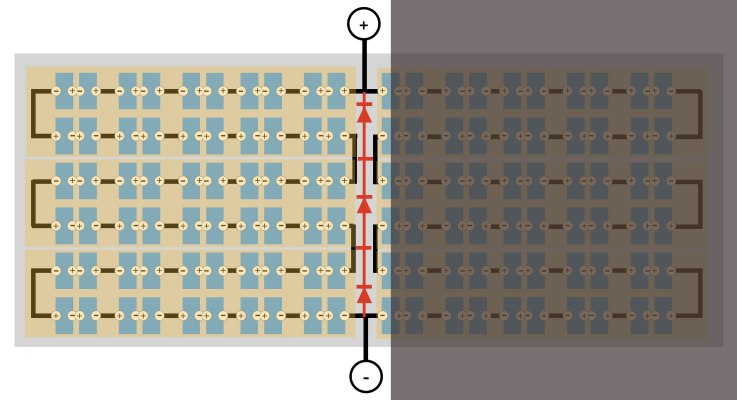
In a conventional solar module, shading even part of the cell area can noticeably reduce power output. Depending on the circuit layout, the impact may extend beyond the cells directly covered by shade.
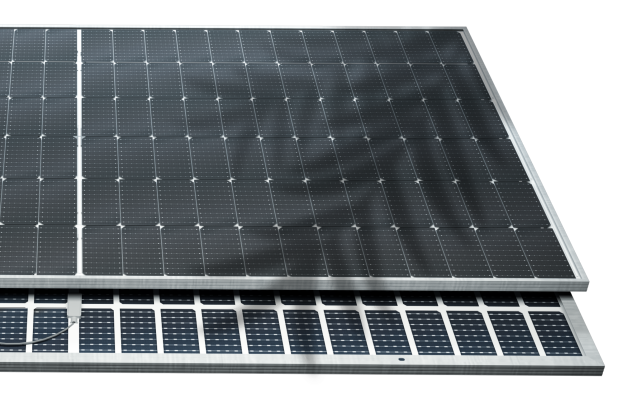
Half-cell technology divides solar cells into smaller sections and enables a different electrical architecture. In combination with multi-busbar technology, this can reduce some resistive losses and improve performance under certain partial-shading patterns.
Important: The benefit depends on module architecture, shading pattern and mounting orientation. It does not eliminate energy loss when a module is shaded.
Visual explanation
A closer look at shading behavior
Two illustrations supplied with the original article, depicting partial shading and the movement of shade across modules.
Benefits and considerations
When do half-cut cells make a difference?
01
Lower resistive losses
Shorter current paths within the cells can help reduce electrical losses associated with resistance.
02
Reduced hot-spot impacts
The half-cell electrical layout may mitigate certain localized heating effects, depending on operating conditions.
03
Better output under some shade patterns
The advantage can be most useful when shade falls across the lower half of a row of suitably oriented modules.
Practical system design
Orientation and shading patterns matter
For the shading scenario described in the source material, portrait mounting helps realize the half-cut module advantage. Ideally, the array is positioned so shade reaches the lower portion of each module row.
However, portrait mounting is not practical on every site. Space constraints, roof orientation, shading conditions and other installation requirements can outweigh the possible benefit. Sites with little shading may see only modest differences between half-cut and standard modules.
The takeaway: selecting cell technology is only one part of the decision. Assess shading, system layout, electrical design and project economics together.
Explore further
Contact our team ↗Find the right solar solution
Explore high-efficiency solar module technologies and speak with our team about your project requirements and site conditions.
Technical explainer · Actual performance depends on system design and operating conditions.